
Friday, January 16, 2026
Plantar Fasciitis: Causes, Symptoms & Effective Treatments for Heel Pain
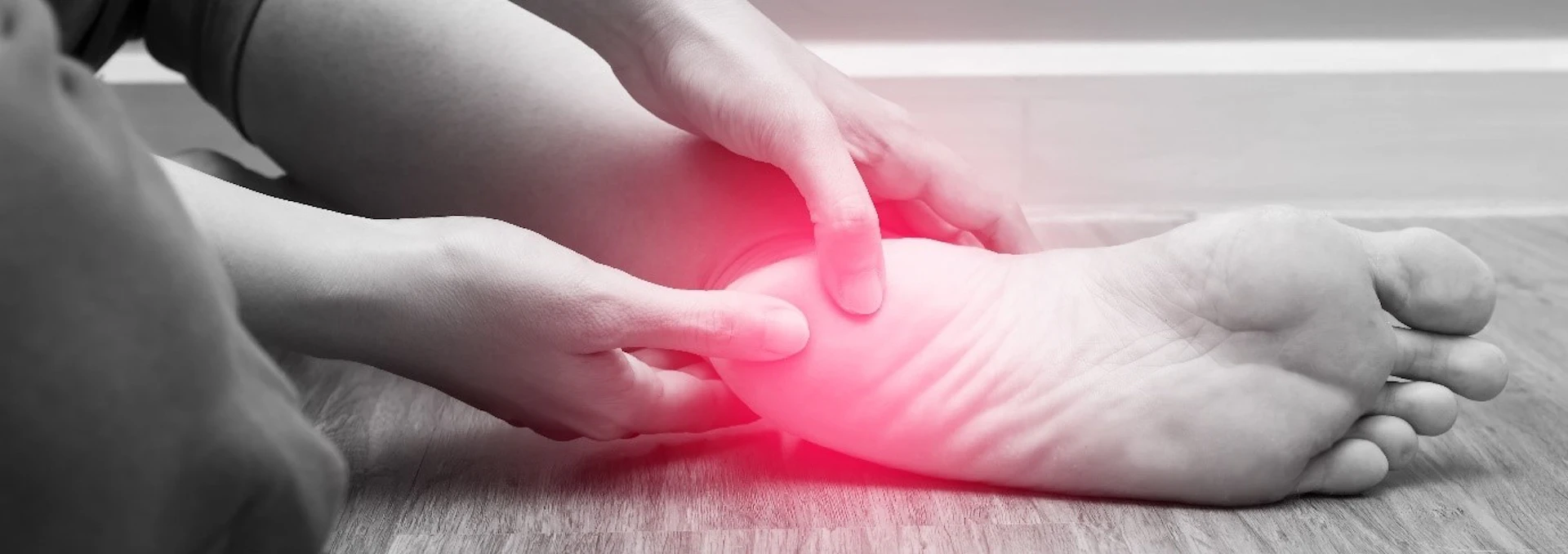
Plantar fasciitis (pronounced PLAN-TUR-FASH-E-ITIS) is one of the most common causes of persistent heel pain, especially first thing in the morning or after long periods of rest. Although it can be extremely uncomfortable, most people recover fully with the right combination of treatment, activity modification, and targeted exercises.
This guide explains what plantar fasciitis is, why it develops, how to recognise the symptoms, and the most effective ways to treat it — including when to seek professional help.
What Causes Plantar fasciitis?
The plantar fascia is a strong, fibrous band of tissue that runs along the bottom of your foot, connecting your heel bone to your toes. Its job is to support the arch and absorb shock when you walk or run.
Plantar fasciitis occurs when this tissue becomes irritated or overloaded. Repeated stress leads to tiny micro‑tears, inflammation, and the classic sharp heel pain many people feel with their first steps in the morning. I often tell my patients that it is like a tennis elbow of the foot. Whilst you can rest your arm easily in tennis elbow, its not so easy to rest your foot as you need to walk on it.
Plantar fasciitis is usually the result of repetitive strain rather than a single injury. Contributing factors include:
Foot & Biomechanical Factors
- Flat feet or high arches
- Tight calf muscles or Achilles tendon
- Over‑pronation (rolling inwards)
Lifestyle & Activity Factors
- Sudden increase in walking or running
- Long periods standing on hard surfaces
- Wearing unsupportive shoes or old trainers
Age & Health Factors
- Most common between ages 40–60
- Higher body weight increases strain on the fascia
What are the symptoms of plantar fasciitis?
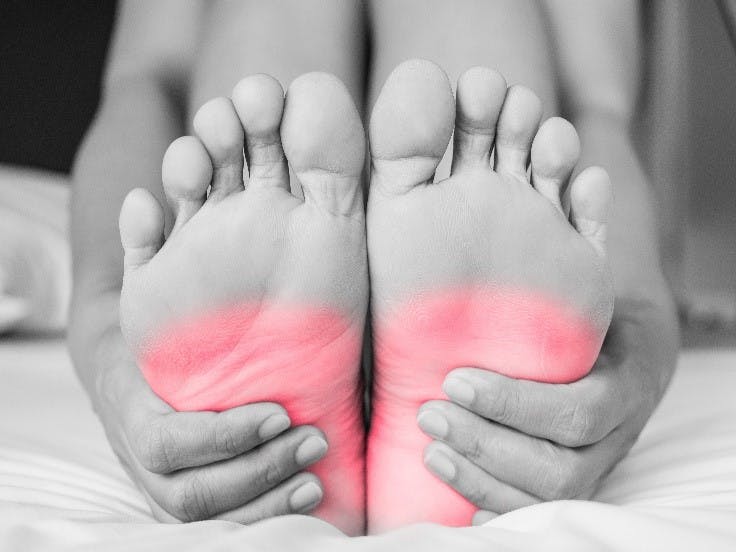
People with plantar fasciitis often describe:
- Sharp heel pain when standing up after rest
- Morning pain that eases after a few minutes of walking
- Tenderness at the bottom of the heel
- Pain after long periods of standing
- Discomfort during or after exercise, rather than during the activity itself
Symptoms usually develop gradually and may affect one or both feet.
Do heel spurs cause plantar fasciitis?
Heel spurs are small bony growths that can form where the plantar fascia attaches to the heel. They are often seen on X‑rays, but they are not the cause of plantar fasciitis. Many people have heel spurs with no pain at all.
The pain comes from the irritated fascia — not the spur itself.
Plantar fasciitis is often mistakenly called heel spurs. The issue of heel spurs causes huge confusion, especially if they have been noted on an X-ray and cause a lot of unnecessary worry. In fact an article in the New York Times famously accused Donald Trump of avoiding the draft to Vietnam because of heel spurs.
How is plantar fasciitis diagnosed?
A diagnosis is usually made based on your symptoms and a physical examination. Your clinician may:
- Press along the heel and arch to identify tender areas
- Assess your foot posture and walking pattern
- Check calf flexibility and ankle mobility
Imaging (such as ultrasound or X‑ray) is only needed if symptoms are unusual or not improving.
What happens if I ignore my plantar fasciitis?
If you ignore the symptoms of plantar fasciitis (often mis-spelt "planters fasciitis", "plantar fashitis" or "planter tendon") then you may compromise the way you walk or exercise. So aside from the progressively worsening foot symptoms, you may also start to develop pains that involve other parts of your body like knee, hip or back pain. It's important to try and deal with plantar fasciitis and the underlying causes as early as possible. Most people who have plantar fasciitis heel pain recover fully but it can sometimes take months or even longer providing you do the right things. I think its important that you calibrate your expectations at the outset, as there is no miracle cure for plantar fasciitis and even if you work at it, it could be months before things improve but rest assured, most cases do improve.
Effective Treatments for Plantar Fasciitis
Most cases improve with a combination of self‑care, physiotherapy, and activity modification. Below are the most evidence‑based treatments.
1. Stretching & Mobility Exercises
Tight calf muscles are one of the biggest contributors to plantar fasciitis. Daily stretching can significantly reduce symptoms.
Key exercises include:
- Calf stretches
- Plantar fascia stretch
- Towel scrunches
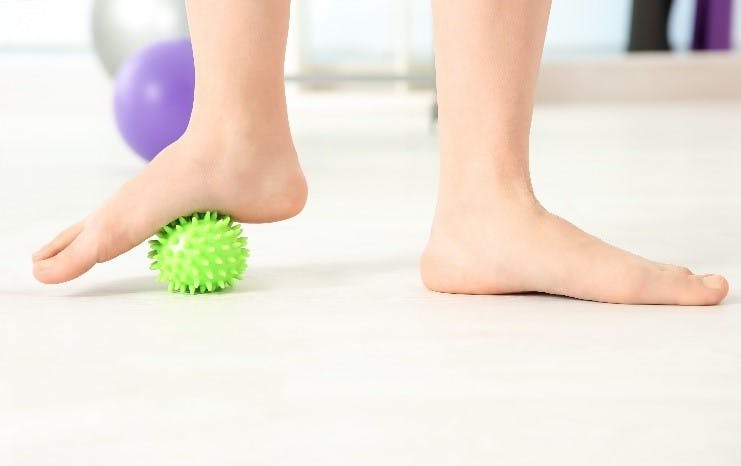
- Rolling the foot over a spikey ball (see below)
Spikey Ball
A spikey ball (can be spelt spiky ball) should become your best friend. I recommend purchasing an 8cm firm but semi-squishey spikey ball, about the size of a tennis ball. I do not recommend the rock-hard spikey balls as they can be very painful. I tell patients to place this onto their mobile phone when they go to bed at night. Why onto their mobile phone I hear you ask? Well because its usually the first thing you go to in the morning, and I want you to pick up the spikey ball before you get out of bed!!.
This is a really important point. You must not stand up out of bed. Instead, as soon as you wake up, swivel round the bed with your legs hanging off the side of the bed. Place the ball on the floor under your affected heel and roll the ball under your heel from your toes to your heel. Do this for 1-2 minutes to get a deep local stretch of the plantar fascia. Then stand onto the ball and roll it under your body weight for 1-2 minutes before getting on with your day. Do the same after getting up from a chair and before going to bed at night.
Some people recommend a rolling pin or a tennis ball as a replacement for a spikey ball and there is nothing wrong with these, but personally I don’t find they are as good at treating plantar fasciitis because they don’t provide as much localised deep tissue massage, nor are they as good at stimulating the nerve fibres in your feet. Birkenstock shoes use the same pointed prongs and a lot of patients really like this as well.
2. Activity Modification
Reducing high‑impact activities temporarily allows the fascia to heal. Switching to low‑impact exercise (cycling, swimming) can help maintain fitness.
3. Supportive Footwear & Insoles
Shoes with good arch support and cushioning reduce strain on the fascia. Custom or off‑the‑shelf orthotics can also help redistribute pressure. I always recommend full length inserts and never half or two thirds length because its important to replace the insole inside your shoes and not add to them, as for most of us our feet don’t fit well into our shoes anyway, and there is no logic in trying to stuff an additional insole into your shoes. Just as important as the insert is a good pair of supportive shoes with good shock absorption such as Kybun shoes (see figure below).

4. Ice & Anti‑Inflammatory Measures
Applying ice for 10–15 minutes after activity can ease pain. Over‑the‑counter anti‑inflammatories may help some people, but should be used cautiously and only if appropriate for you.
5. Physiotherapy
A physiotherapist can provide:
- Manual therapy
- Strengthening programmes
- Gait and posture correction
- Progressive loading exercises
6. Shockwave Therapy
Extracorporeal shock wave therapy can be an effective option for persistent cases. It stimulates healing in the fascia and can significantly reduce pain over several sessions.
7. Night Splints
These hold the foot in a stretched position overnight, preventing the fascia from tightening while you sleep. This is not a replacement for physical therapy and proper stretching exercises, but it is certainly a good adjunct. A lot of patients find night splints uncomfortable so these are not my first choice of treatment.
8. Weight Loss
Losing excess weight can really help reduce the stresses on the plantar fascia.
9. Injections (Used Selectively)
Steroid injections may provide short‑term relief but are not a long‑term solution. Newer options such as platelet‑rich plasma (PRP) may be considered in chronic cases.
How long does plantar fasciitis take to heal?
Most people improve within 6–12 weeks with consistent treatment. More stubborn cases may take several months, especially if contributing factors (such as tight calves or poor footwear) aren’t addressed.
When should I see a specialist?
Seek professional assessment if:
- Pain persists beyond 8 weeks
- Symptoms are severe or worsening
- You struggle to walk normally
- You have numbness, swelling, or unusual symptoms
A specialist can confirm the diagnosis, rule out other causes of heel pain, and guide you through advanced treatment options.
Frequently asked questions
Is plantar fasciitis the same as heel spurs?
No — heel spurs are often present but are not the cause of pain.
Why is the pain worse in the morning?
The fascia tightens overnight. Your first steps stretch it suddenly, causing sharp pain.
Can plantar fasciitis come back?
Yes, especially if underlying factors like tight calves or poor footwear aren’t addressed.
Is surgery ever needed?
Very rarely. Surgery is reserved for severe cases that don’t respond to months of conservative treatment.
Questions to ask your doctor if you suffer from plantar fasciitis.
- What is causing my symptoms?
- Do I need any special tests?
- How long will it take for this to get better?
- What’s the best treatment plan for me?
- Are there any alternatives to what you are suggesting?
- Is there anything I need to avoid?
- Do you recommend any patient information guides or websites for more information?
Final Thoughts
Plantar fasciitis can be frustrating, but with the right approach most people make a full recovery. Consistent stretching, supportive footwear, and gradual return to activity are the foundations of treatment. If symptoms persist, professional assessment and treatments such as physiotherapy or shockwave therapy can help you get back on your feet.
This article was written by Mr Andrew Goldberg OBE MD FRCS(Tr&Orth), a Consultant Orthopaedic Foot & Ankle Surgeon for Adults and Children from London. If you would like to organise a consultation with Mr Goldberg please call his office on +44(0)207 042 1828 or email info@goldbergpp.com
Did you enjoy this article? You may also like What can i do for an ankle sprain?